Red grape wine
Making red grape wine is an excellent introduction to winemaking. Ripe fruit, suitable yeast and patience produce a wine with natural colour, fruity aromas and a character shaped by the grape variety.
View recipe → A THOUGHTFUL APPROACH TO FERMENTATION
From ripe fruit to your first bottle: explore 24 recipes with ingredients, measurements and clear instructions.
Choose a recipe ↓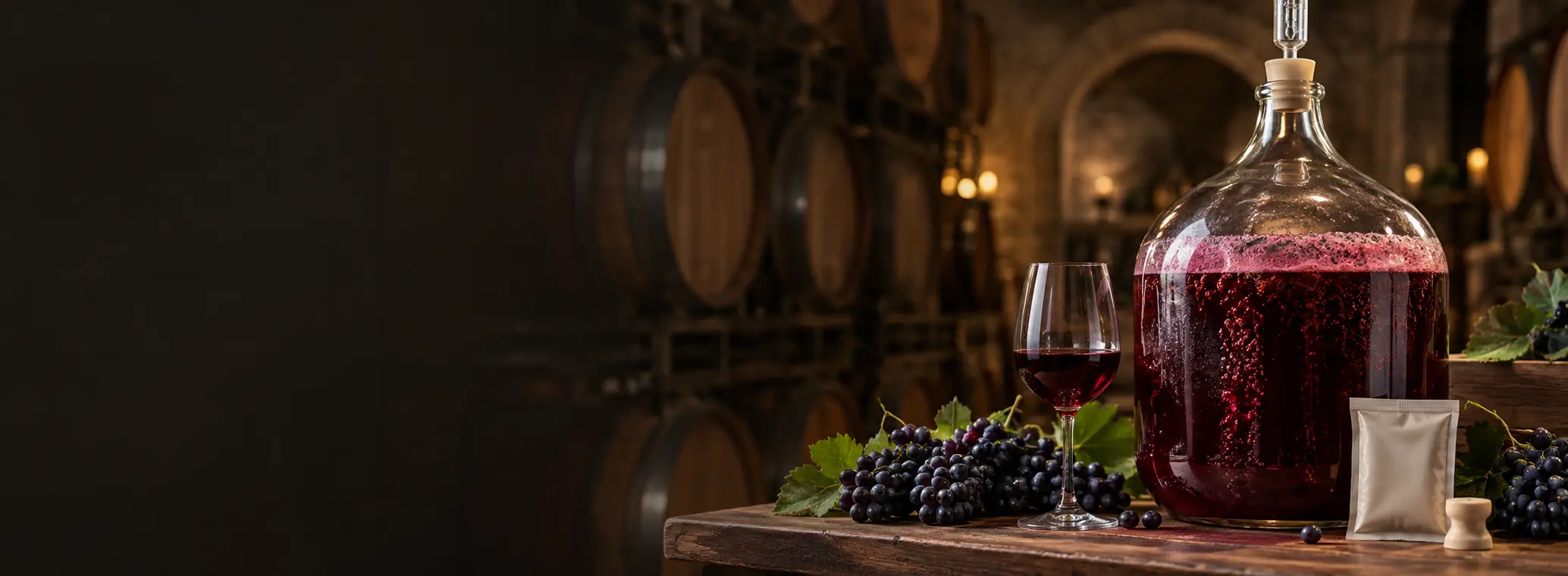
Found: 24 of 24 recipes
Making red grape wine is an excellent introduction to winemaking. Ripe fruit, suitable yeast and patience produce a wine with natural colour, fruity aromas and a character shaped by the grape variety.
View recipe →Making your own wine preserves fruit aromas and develops your winemaking hobby. We ferment the prepared liquid without skins or seeds.
View recipe →Ripe fruit preserves the aromas of the season in your own wine. We ferment with fruit, then separate the liquid and let the wine age.
View recipe →Ripe fruit preserves the aromas of the season in your own wine. We ferment with fruit, then separate the liquid and let the wine age.
View recipe →Ripe fruit preserves the aromas of the season in your own wine. We ferment with fruit, then separate the liquid and let the wine age.
View recipe →Ripe fruit preserves the aromas of the season in your own wine. We ferment with fruit, then separate the liquid and let the wine age.
View recipe →Making your own wine preserves fruit aromas and develops your winemaking hobby. We ferment the prepared liquid without skins or seeds.
View recipe →Making your own wine preserves fruit aromas and develops your winemaking hobby. We ferment the prepared liquid without skins or seeds.
View recipe →Ripe fruit preserves the aromas of the season in your own wine. We ferment with fruit, then separate the liquid and let the wine age.
View recipe →Ripe fruit preserves the aromas of the season in your own wine. We ferment with fruit, then separate the liquid and let the wine age.
View recipe →Ripe fruit preserves the aromas of the season in your own wine. We ferment with fruit, then separate the liquid and let the wine age.
View recipe →Flowers offer new aromas to explore. We prepare a hot infusion, strain it and ferment only the liquid.
View recipe →Flowers offer new aromas to explore. We prepare a hot infusion, strain it and ferment only the liquid.
View recipe →Making cider is an excellent way to learn about fermentation. We use natural fruit sugar, without adding sugar or water to the main batch.
View recipe →We use ALCOMAT Scotch Whisky Distillers Yeast, alpha-amylase and glucoamylase. The first liquefies the mash; the second helps produce fermentable sugars. The recipe is inspired by the style; it does not justify using the names bourbon or Scotch Whisky.
View recipe →We use ALCOMAT American Whiskey Distillers Yeast, alpha-amylase and glucoamylase. The first liquefies the mash; the second helps produce fermentable sugars. The recipe is inspired by the style; it does not justify using the names bourbon or Scotch Whisky.
View recipe →Making cider is an excellent way to learn about fermentation. We use natural fruit sugar, without adding sugar or water to the main batch.
View recipe →Making cider is an excellent way to learn about fermentation. We use natural fruit sugar, without adding sugar or water to the main batch.
View recipe →Learn about yeast selection, temperature, clearing and stabilisation.
Explore the guides →